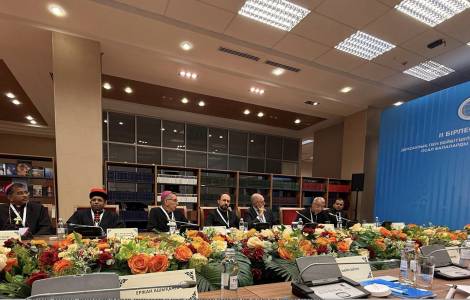
ASTANA (Fides): Caring for children with incurable illnesses, safeguarding their dignity, and exploring the contribution religions can make in responding to human vulnerability were at the heart of the Second Joint Colloquium between the Kazakhstan’s International Centre for Interfaith and Interreligious Dialogue and the Holy See’s Dicastery for Interreligious Dialogue.
The meeting took place at the National Museum of Astana from October 2-3. The Holy See delegation was led by George Jacob Cardinal Koovakad, prefect of the Dicastery for Interreligious Dialogue.
Entitled “Promoting Health, Promoting Peace: A Shared Commitment to Caring for Vulnerable Children,” the colloquium brought together institutional representatives, religious leaders and communities, paediatricians, experts in bioethics and theology, scholars and specialists. According to the official programme, discussions focused on three main areas: the ethical foundations of caring for children and interreligious solidarity; the protection of children’s rights and dignity in the context of illness; and the development of medical, scientific and institutional cooperation. Particular attention was also be given to the opportunities and ethical issues surrounding the use of artificial intelligence in paediatrics.
For Kazakhstan, the protection of vulnerable children forms part of a broader path of cooperation with the Holy See in the field of interreligious dialogue. The country has made the Congress of Leaders of World and Traditional Religions, established in Astana in 2003, one of the main international platforms for dialogue among representatives of different religious traditions.
Related posts:
Philippine bishops raise concern over delay in Duterte impeachment

Indonesia’s Muslim leaders looking forward to pope’s visit

Chancery Notice: Confirmation for Adults; Rite of Acceptance into Order of Catechumens; Mass for the...