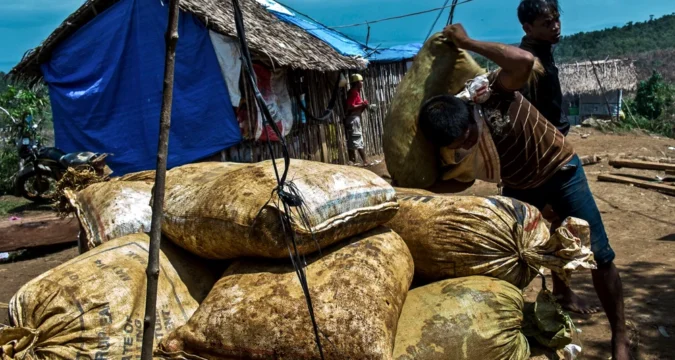
DAET (LiCAS News): The Catholic Church in Camarines Norte, the Philippines, has warned that large-scale mining endangers land, livelihoods, and the future of local communities. Church leaders are urging government and corporations to ensure transparency, scientific scrutiny, and genuine community participation in all development decisions.
These concerns were raised in a pastoral manifesto from the Diocese of Daet, issued on September 1 for the Season of Creation 2026. The manifesto highlighted environmental challenges in the province, including deforestation, waste management issues, water shortages, pollution, climate change, and large-scale mining.
“Our call is rooted in the concrete conditions of Camarines Norte—in the land, sea, forests, rivers, and the communities we serve,” the manifesto stated.
The diocese connected environmental degradation to impacts on communities, noting that damage to land harms residents, destruction of marine environments deprives fishers of livelihoods, and polluted water resources hit the poorest hardest.
The Church called on government and corporations to uphold transparency, scientific assessment, accountability, and prioritise the common good.
Our call is rooted in the concrete conditions of Camarines Norte—in the land, sea, forests, rivers, and the communities we serve
Pastoral manifesto from the Diocese of Daet
Communities directly affected by development should have meaningful participation in decisions about their land, water, livelihoods, and future, the manifesto said.
The diocese stressed that the Church does not oppose development, employment, business, or infrastructure.
“The Church is not against development, jobs, business, or infrastructure. The question is: What kind of development? For whom? Who benefits, who sacrifices, and what is the return?” it said.
It argued that genuine development must be people-centred, just, and sustainable, warning against enriching a few at the expense of others and future generations.
As we celebrate the 500 years of Christianity in the Philippines. The Chaplaincy to Filipino Migrants organises an on-line talk every Tuesday at 9.00pm. You can join us at:
https://www.Facebook.com/CFM-Gifted-to-give-101039001847033
The manifesto described creation as a gift from God entrusted to humanity, rather than a commodity or personal possession.
The Church is not against development, jobs, business, or infrastructure. The question is: What kind of development? For whom? Who benefits, who sacrifices, and what is the return?
Pastoral manifesto from the Diocese of Daet
“Creation is a gift from God, not a commodity or possession. The earth, the sea, the rivers, the forests, and all life are entrusted to us. We are not owners but stewards,” the manifesto said.
The diocese urged families and young people to adopt simple, responsible lifestyles, reduce waste, manage rubbish, and protect the environment for future generations.
Parishes, schools, and religious communities were encouraged to promote ecological education, conduct simple audits, conserve resources, and protect natural habitats.
The manifesto maintained that ecological conversion requires lasting changes in attitudes, lifestyles, and consumption, not just short-term programmes.
“Protest or short-term programmes are not enough. A change of heart, desire, lifestyle, and consumption patterns is needed: from waste to stewardship; from exploitation to care; from ‘mine’ to ‘ours’,” it said.
The Diocese of Daet pledged to act with truth, dialogue, unity, and love, avoiding anger or violence.
The manifesto was signed on September 1, the 52nd anniversary of the canonical erection of the Diocese of Daet and the start of the Season of Creation, by Bishop Herman G. Abcede, Merle C. Fontanilla, president of the Council of the Laity, and Father Ernie G. Sanchez, chairman of the Commission on Ecology.
It was proclaimed in all parishes and communities of the diocese on September 6.
The manifesto also called for concrete actions across parishes, schools, communities, and organisations during the Season of Creation, in line with its commitments.
Related posts:

We are not ‘clerics of the state’, pope reminds Russian patriarch
Suspicions of shenanigans in case against Indian Jesuit
Curia must reflect ‘new humanity,’ founded on love, solidarity, pope says