(LiCAS News): Bishop Joseph Durero of Daru-Kiunga has appealed for prayers for rain as a prolonged drought dries rivers, disrupts food and fuel deliveries, and deepens hardship among remote communities in Papua New Guinea’s Western Province, according to the Catholic Bishops Conference of Papua New Guinea and Solomon Islands..
Bishop Durero said falling river levels have prevented ships from reaching parts of the province, cutting a key transport route for communities that depend on waterways for essential supplies.
“The ships cannot come to deliver food because the water levels are low in Western Province. Oh, speak to that. So it means no food, no fuel, and everything. Oh, the situation is becoming worse; please pray for us. Pray for rains, that’s all. We are asking for rain,” the bishop said during Mass in Port Moresby.
“Just ask God to send rain, and the communities will have life,” he said.
Western Province is home to a culturally diverse indigenous population, including Kiwai, Bamu and Fly River peoples, according to the provincial government.
And this is the worst; there are stories, stories before 1987, something around 2000, similar thing, but now it’s a really different time since April, May, June, July, August and now October. Our rivers are also drying
Bishop Durero
It also identified Marind, Kiwai and Arapesh communities in Middle Fly. In Delta Fly, where much of the population lives along the Aramia and Bamu rivers, the Gogodala are the largest of 15 ethnic groups.
Rivers are critical transport routes. Provincial planning documents say boats and canoes are commonly used along the Fly, Strickland, Aramia and Bamu rivers, while many communities rely on fishing, hunting and subsistence agriculture for food and livelihoods.
Bishop Durero said the current drought is more severe than similar episodes remembered in previous decades.
“And this is the worst; there are stories, stories before 1987, something around 2000, similar thing, but now it’s a really different time since April, May, June, July, August and now October. Our rivers are also drying,” he said.
He linked the worsening conditions to climate change and expressed particular concern for communities in North and Middle Fly.
Bishop Durero said the current drought is more severe than similar episodes remembered in previous decades
“Please include us in your prayers, Western Province as a whole, especially North and Middle Fly. The Daru, we call it South Fly. It’s a long sea. So, it’s a different situation there,” he said.
The Catholic Bishops Conference of Papua New Guinea and Solomon Islands said reports from Western Province point to worsening shortages as the drought continues.
Residents along the Fly River reported that store goods were running out and prices had risen beyond what many people could afford.
Health workers have also raised concerns over water supplies at Kiunga Hospital, where water tanks have emptied or are running low, raising fears of infection. They also raised concerns over when rice and flour would again be available in shops.
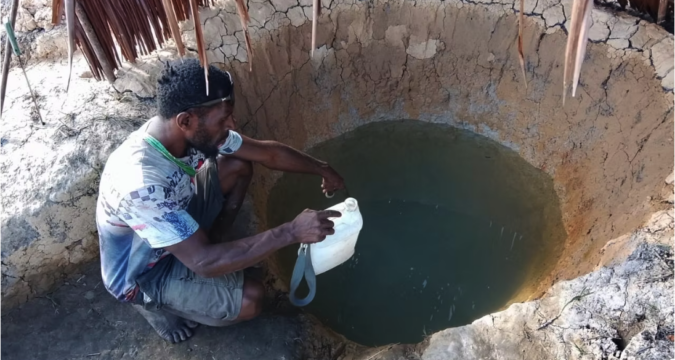
The bishops’ conference reported that the prolonged absence of rain has forced some families to collect drinking water from hand-dug wells and other shallow water sources.
Bishop Durero said his main concern was how long the dry conditions would persist and how much worse the situation could become if rain does not return.
He called on Catholics and people of goodwill to remember Western Province in their prayers during October, the month of the Holy Rosary.