BANGKOK (LiCAS News): “As governments continue to approve more coal, oil, gas, and LNG projects, the region is moving deeper into ecological collapse,” said Anj Dacanay, lead campaigner for Energy Shift Southeast Asia, on August 5. He was speaking following the two-day Asian Faith Leaders’ Roundtable on Biodiversity, Climate, and Energy, held in Bangkok, Thailand.
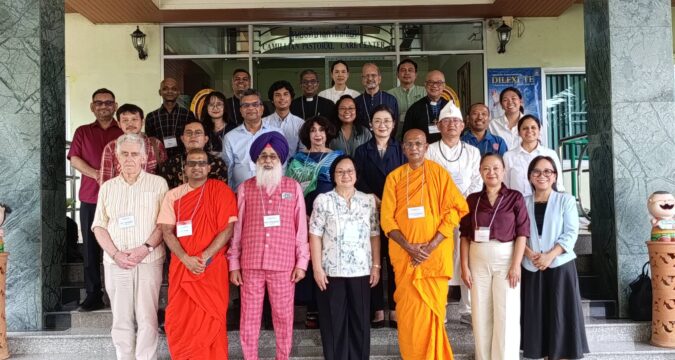
The roundtable brought together Muslims, Protestants, Buddhists, Sikhs, Baha’is, Catholics, Evangelicals, members of the Indigenous Kirat faith, and traditional wisdom holders.
The faith leaders called for a sustained interfaith movement to challenge fossil fuel expansion and prevent biodiversity-rich ecosystems and vulnerable communities from becoming sacrifice zones in the transition to renewable energy.
Participants discussed closer cooperation among faith communities to address biodiversity loss, climate change, and the energy transition.
Energy Shift Southeast Asia said faith communities must play a central role in confronting these interconnected crises, as governments continue to approve coal, oil, gas, and liquefied natural gas projects across the region.
“There can be no climate justice without biodiversity protection, and there can be no genuine energy transition if it destroys the very ecosystems that sustain life,” Dacanay said.
There can be no climate justice without biodiversity protection, and there can be no genuine energy transition if it destroys the very ecosystems that sustain life
Anj Dacanay
The group said fossil fuel expansion threatens forests, coral reefs, fisheries, and other ecosystems, while also displacing indigenous peoples, fisherfolk, farmers, and vulnerable communities.
It cited the Coral Triangle and the Mekong River as globally significant ecosystems that sustain millions of people, but which face growing threats from fossil fuel exploration and development.
“Asia cannot claim to be serious about protecting biodiversity while allowing the destruction of the very ecosystems that keep our people alive,” Dacanay said.
“Biodiversity hotspots such as the Coral Triangle and Mekong River are not sacrifice zones for fossil fuel expansion. They are living treasures that the world cannot afford to lose,” she added.
Bishop Allwyn D’Silva, chairperson of the Climate Change Desk of the Federation of Asian Bishops’ Conferences’ Office of Integral Human Development, said faith leaders could inspire people to reject development models that harm communities and ecosystems.
“Faith leaders possess unparalleled moral authority capable of inspiring millions to reject destructive development models and champion a future powered by renewable energy, ecological integrity, and social justice,” Bishop D’Silva said.
Biodiversity hotspots such as the Coral Triangle and Mekong River are not sacrifice zones for fossil fuel expansion. They are living treasures that the world cannot afford to lose
Anj Dacanay
“The defining question of our generation is not whether we possess the technology to solve these crises—we do. The question is whether we have the moral courage to act before it is too late,” he added.
Shah Kirit of the Global UNITY Network said Islamic teaching calls on people to act as stewards of creation.
“From an Islamic perspective, human beings are entrusted by God as khalifah—stewards of his creation,” Kirit said. “This trust calls us to uphold justice, compassion, balance, and moderation, and to avoid causing harm on Earth.”
He said meaningful change requires that faith is accompanied by responsibility and action.
“Regardless of our beliefs, faith should inspire us not merely to hope for a better world, but to become agents of positive change within it,” Kirit said.
The defining question of our generation is not whether we possess the technology to solve these crises—we do. The question is whether we have the moral courage to act before it is too late
Bishop Allwyn D’Silva
Representatives from Franciscan International, Religious in Europe Networking Against Trafficking and Exploitation, Jesuit groups, the Laudato Si’ Movement, GreenFaith Indonesia, and the Christian Conference of Asia also attended the gathering.
Participants urged governments across Asia to accelerate the transition to renewable energy, while placing biodiversity, human rights, and community welfare at the centre of development.
They also expressed hope that the roundtable would develop into a sustained regional movement, engaging governments and international processes under the Convention on Biological Diversity and the United Nations Framework Convention on Climate Change.
“Our common home cannot wait. The time for moral leadership is now. The time for protecting biodiversity is now. The time for a just transition away from fossil fuels is now,” Bishop D’Silva said.
The roundtable was co-organised by the Federation of Asian Bishops’ Conferences, through its Office of Integral Human Development–Climate Change Desk and Office of Interreligious Dialogue, and the Centre for Energy, Ecology, and Development.