MANILA (LiCAS News): Pablo Virgilio Cardinal David of Kalookan, the Philippines, warned that the Pax Silica technological hub could result in the Philippines supplying land, natural resources, and cheap labour, while other nations secure the initiative’s strategic and technological gains.
The proposed 1,619-hectare semiconductor and AI hub in New Clark City, Capas, Tarlac, planned as part of the Luzon Economic Corridor, is expected to consume around 130 million litres of water per day and three gigawatts of electricity.
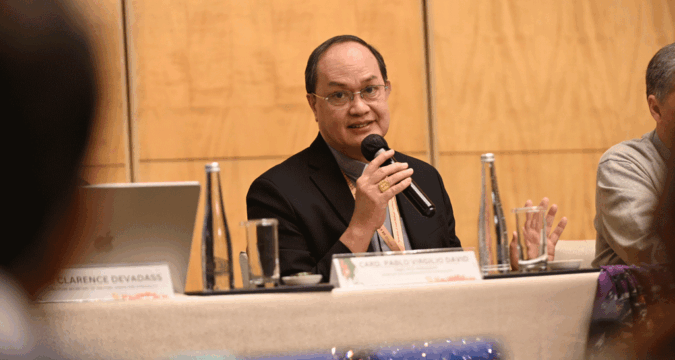
In a reflection posted on his social media account, Cardinal David said the key question for the country is whether the initiative will strengthen Filipino scientific and industrial capacity, or primarily serve foreign interests. “Will Pax Silica help build Filipino scientific capability, technological innovation, and industrial resilience?” the cardinal asked. “Or will it mainly serve the strategic interests of others while Filipinos provide the land, natural resources, water, energy, tax incentives, and labour?”
The vice-president of the Federation of Asian Bishops’ Conferences said nations naturally pursue their own interests, citing the United States’ efforts under the “America First” agenda of its president, Donald Trump to strengthen American leadership in artificial intelligence, semiconductors, and critical supply chains.
Will Pax Silica help build Filipino scientific capability, technological innovation, and industrial resilience? Or will it mainly serve the strategic interests of others while Filipinos provide the land, natural resources, water, energy, tax incentives, and labour?
Cardinal David
“That is the reality of international politics,” the cardinal said. He stressed that raising questions about Pax Silica does not mean opposing foreign investment.
“These are legitimate questions—not because we oppose foreign investment, but because genuine partnership should strengthen the nation that hosts it,” Cardinal David said.
The cardinal called for transparency, technology transfer, meaningful participation of Filipino scientists and industries, environmental responsibility, and measures that would help the Philippines develop higher-value industries.
“Prudence therefore requires transparency, technology transfer, meaningful participation of Filipino scientists and industries, responsible stewardship of the environment, and a clear commitment to moving our country up the value chain, rather than remaining merely a source of raw materials and cheap labour,” he said.
He added that the debate should go beyond the economic and technological benefits of the initiative to examine its effects on people and society.
As we celebrate the 500 years of Christianity in the Philippines. The Chaplaincy to Filipino Migrants organises an on-line talk every Tuesday at 9.00pm. You can join us at:
https://www.Facebook.com/CFM-Gifted-to-give-101039001847033
Prudence therefore requires transparency, technology transfer, meaningful participation of Filipino scientists and industries, responsible stewardship of the environment, and a clear commitment to moving our country up the value chain, rather than remaining merely a source of raw materials and cheap labour,
Cardinal David
“In Magnifica Humanitas, Pope Leo XIV reminds us that the decisive issue is not what artificial intelligence can do, but what kind of human beings we are becoming,” Cardinal David said. “Technology must remain the servant of humanity, never its master.”
The cardinal also cited Pope Francis’ Fratelli Tutti, warning against allowing geopolitical competition to turn the digital revolution into another instrument of domination.
“The return of the logic of ‘might makes right’ has repeatedly led humanity to conflict and war,” he said. “The digital revolution must not become another arena where technological power is used for domination rather than cooperation.”
The cardinal said the Catholic Church, as a communion of local Churches across national borders, could offer a moral vision that rises above geopolitical rivalries.
“She does not ask nations to abandon their legitimate interests, but to place them at the service of the common good of the entire human family,” he said.
Technology must remain the servant of humanity, never its master
Cardinal David
Cardinal David said Pax Silica should ultimately be judged not only by whether it strengthens economies or expands the reach of artificial intelligence.
“The real question is whether it will help build what Pope Leo calls a civilisation of love rather than a culture of power—a future in which technological progress serves human dignity, social fraternity, care for our common home, and peace among nations,” he said.
According to an August 2 report on CBCP News, the Catholic Educational Association of the Philippines said public skepticism about the project reflects lessons from past extractive industries that promised economic progress but often left communities with environmental damage, weak oversight and few lasting benefits.
“These concerns should not be dismissed as opposition to development but recognized as important questions about intergenerational equity, environmental sustainability, and national economic strategy,” CEAP said in a statement.
The association said many Filipinos have seen extractive projects promise prosperity but leave behind environmental degradation, weak regulatory enforcement, limited community benefits and little local industrial development, making public skepticism “both understandable and legitimate.”