by John Singarayar SVD
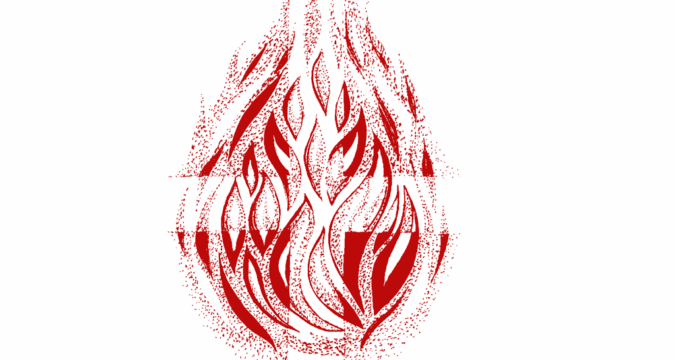
There is something almost embarrassing about the way Pentecost gets observed. Candles were lit, hymns were sung, and a brief homily about unity was given; the whole thing wrapped up before lunch. We have taken one of the most violent, disorienting moments in religious history—rushing wind, fire on human heads, and a crowd of frightened people losing control of their own tongues—and turned it into an anniversary.
Wildfire is easier to live with once it is framed and hung on a wall.
But the event was not designed for comfortable observance. It was designed to permanently disrupt the people it touched—and through them, every assumption their world had quietly agreed to protect.
The person nobody was translating for
The detail in Acts 2 I cannot stop returning to is this: the people most undone by Pentecost were not the insiders. They were the perpetual outsiders—Parthians, Elamites, visitors from places the Roman world considered peripheral—people who had spent entire lives arriving at important conversations slightly too late, slightly too foreign, and slightly too far from the centre to matter.
Language is never just vocabulary. It is the architecture of belonging. It decides who walks into a courtroom with confidence and who drowns quietly inside it
For once, nobody translated down to them. The message came first, in their own language, with their own rhythm; as if they were the ones the whole thing had been arranged for.
That inversion is the theological heart of Pentecost. And we have almost entirely ignored it.
Language is never just vocabulary. It is the architecture of belonging. It decides who walks into a courtroom with confidence and who drowns quietly inside it. Who leaves a hospital understanding their diagnosis, and who drives home holding paperwork they cannot read. Across the world, hundreds of millions of people carry this exhaustion—the particular weight of living inside systems built in someone else’s language for someone else’s convenience.
Pentecost does not spiritualise that exhaustion into patience. It names it as precisely the kind of wall the Spirit came to demolish.
What we preserved while preaching liberation
This is the part that should be harder to write than it is.
Racial segregation did not infiltrate churches against their will. It was defended from pulpits, protected by theology, and in many places outlasted the explicit arguments for it by decades. The communities quickest to cite Pentecost as their founding moment were, in some cases, the slowest to extend its implications to the person sitting in the wrong pew, drinking from the wrong fountain, or burying their dead in the wrong corner of the churchyard.
The Spirit made no distinction between Jew and Gentile, enslaved and free, educated and ignored. Any community claiming that Spirit as its origin carries a permanent obligation to dismantle every structure that still makes those distinctions for us
Caste is noticeable in India, but no less real—class dressed in the language of merit, sorting people into worthy and disposable with a precision that overt discrimination could never achieve.
I am not writing this from outside that failure. I am writing from inside a tradition that has said the right things with remarkable consistency and done the harder things with remarkable reluctance. That gap is not a footnote. It is the central fact any honest Pentecost reflection has to reckon with.
The Spirit made no distinction between Jew and Gentile, enslaved and free, educated and ignored. Any community claiming that Spirit as its origin carries a permanent obligation to dismantle every structure that still makes those distinctions for us.
That obligation does not soften with time. It accumulates interest.
The God we shrank to fit our borders
Nationalism is an old temptation dressed in new clothes. The instinct to make God local—reliably sympathetic to one nation’s anxieties, one culture’s preferences, one region’s definition of who counts as a neighbour—is as ancient as religion itself and as current as this morning.
Any theology that has God cheering reliably for one side has not met the God of Pentecost. It has built a more comfortable substitute and given it the same name
Pentecost will not cooperate. The nations did not dissolve in Jerusalem. People kept their languages, their histories, their complexity. But the Spirit moved across every boundary that human beings had declared permanent, authorised by no government, contained by no border, and fluent in every tongue that power had ever dismissed as peripheral.
Any theology that has God cheering reliably for one side has not met the God of Pentecost. It has built a more comfortable substitute and given it the same name.
The questions we keep postponing
Acts 2 does not close with a moved crowd dispersing back to their previous arrangements. It ends with a community that looks structurally different from everything around it—eating across old divisions, sharing across old boundaries, and growing precisely because it refused to reconstruct the hierarchies it had just been freed from.
That community is still the goal. Which means the questions Pentecost keeps asking are stubbornly specific.
Pentecost is not primarily a social programme. The barrier it breaks first is interior—the wall between a person and their own belovedness
Who is absent from your community, and when did you stop being troubled by that? Whose cultural assumptions quietly run the room while everyone pretends the room is neutral? Where does your stated theology and your actual practice diverge—and how long have you been too busy to notice the distance?
I have sat in enough rooms to know these questions do not get easier with familiarity. They get easier to avoid. That is not the same thing.
What the fire actually touches first
Here is what took me a long time to understand: Pentecost is not primarily a social programme. The barrier it breaks first is interior—the wall between a person and their own belovedness. The shame that convinces someone they are too peripheral to be addressed directly, in their own language, as if the whole thing were arranged for them.
That is where the fire lands first. The racial reconciliation, the caste dismantling, the border-crossing, the redistribution of whose voice fills the room—all of it flows from that original, personal disruption.
You cannot give away a freedom you have not yet received. And you cannot receive it while you are busy domesticating it.
The wind is still moving. The only question worth asking is whether we will finally stop holding the windows shut.