SEOUL (UCAN): The Catholic bishops’ Ecological Environment Committee, Justice and Peace Committee and 42 diocesan organisations from across South Korea reiterated their strong opposition to the Japanese government’s decision to discharge treated radioactive water used to cool the quake-hit Fukushima nuclear plant, into the sea, the Catholic Peace Broadcasting Corporation [CPBC] reported on June 28.
In the joint statement issued on June 26, thecChurch groups expressed extreme concern as the dumping plan is “just around the corner” despite stiff opposition from many quarters including environmentalists, scientists, fishing communities, and Church groups.
The statement warned that “the most serious radioactive leakage accident in human history is currently underway.”
The groups also dismissed the Japanese government’s claim that “the contamination caused by the radioactive leak is calming down and that the Fukushima area is safe.”
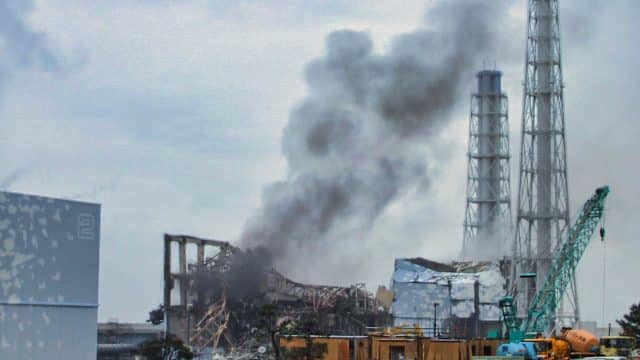
Fukushima Daiichi nuclear plant was badly damaged by a massive tsunami and earthquake in 2011. Authorities used millions of tons of water to cool down the plant amid a feared nuclear discharge that was eventually averted.
Church groups expressed extreme concern as the dumping plan is “just around the corner” despite stiff opposition from many quarters including environmentalists, scientists, fishing communities, and Church groups
Following years of debate over the disposal, the Japanese government decided to release the treated water into the sea. The initial plan was to start releasing the water in 2022 but a final decision is pending.
Most of the radioactive isotopes in the water have been removed using a complex filtration process. But one isotope, tritium, cannot be removed, so water has been stored in huge tanks that were expected to be filled up by 2022, the BBC reported.
Korean Catholic groups also lamented that the Japanese government and Tokyo Electric Power Company [TEPCO], which manages the plant, did not properly disclose details of emissions since the disaster.
They cited a report titled, Analysis Report on Radioactive Contamination of Japanese Agricultural and Livestock Products, released by the Citizens’ Radiation Monitoring Centre and the Korea Federation for Environmental Movements in April this year.
The report found a wide range of radioactive contamination in foodstuffs, including 5.3 per cent of marine products, 21.1 per cent of agricultural products, and 2.6 per cent of livestock products.
…the dumping of radioactively contaminated water from Fukushima could not shake the anxiety that it might cause widespread radioactive contamination in the Pacific Ocean, including our sea
The International Atomic Energy Agency [IAEA] examined contaminated water and warned about risks that still exist, CBPC reported. It said the authorities would dump contaminated water through the multi-nuclide removal facility, ALPS, but only nine types of radioactive isotopes would be inspected due to technical and cost problems.
The Korean Church groups said they are concerned that cthe dumping of radioactively contaminated water from Fukushima could not shake the anxiety that it might cause widespread radioactive contamination in the Pacific Ocean, including our sea.”
The groups suggest that radioactively contaminated water from Fukushima could be stored for a long period of time by using a large-capacity storage tank. The Ecological Environment Committee urged that contaminated water be stored on land rather than dumped into the sea and that possible conversion to eco-friendly renewable energy should be looked into.
The Japanese government was also called upon to maintain transparency by disclosing all data related to the Fukushima plant.
In 2021, Korean and Japanese bishops issued a joint statement voicing their opposition to the release of Fukushima plant water into the sea [Sunday Examiner, 28 February 2021].