
Ambrose Mong
Falling on September 24, the celebration of Mid-Autumn Festival offers Catholics a rich inculturation opportunity: to receive this cultural gift and reinterpret its symbols through the lens of Christian faith. As Catholics we can accept this festival as a gift of human culture, reinterpreting its traditional symbols, the harvest, the full moon, family reunions, and shared feasts, through the lens of Christian understanding.
In ancient times, the Mid-Autumn Festival centred around rituals honouring the moon deity Chang’e and seeking good fortune under the autumn sky. While Catholic teachings firmly reserves worship [latria] for the Trinity alone, it does not discard the act of looking up at the night sky. Instead, we can shift the focus from the celestial body to the God who made heaven and earth.
Drawing on the Psalms, which declare that “the heavens show forth the glory of God,” Catholics gaze upon the full moon as a reminder of divine order and beauty. Beyond creation, the moon provides a vivid spiritual analogy:
Reflecting the Son: Like the moon which shines only by reflecting the sunlight, the Christian soul is called to reflect Christ, the true “light of the world” [John 8:12], so that the radiance illuminates darkness in our world.
Marian Devotion: This imagery also evokes a distinct Marian dimension. Because the festival often falls near the Feast of the Nativity of the Blessed Virgin Mary [September 8], Catholic tradition frequently compares Mary to the full moon—fair, serene, and perfectly reflecting the glory of her Son, the “Sun of Justice.” Celebrating under the moonlight can thus become a Marian meditation, perhaps through praying the Rosary to reflect on her humility and purity.
At its core, Mid-Autumn is an autumn harvest celebration—a time when farming communities give thanks for the abundance of the earth. For us, this spirit of gratitude finds its ultimate fulfilment in the Holy Mass.
The word Eucharist itself derives from the Greek word for “thanksgiving.” In the Mass, the priest offers bread and wine—specifically described in the liturgy as the “fruit of the earth and work of human hands”—which then become the Body and Blood of Christ.
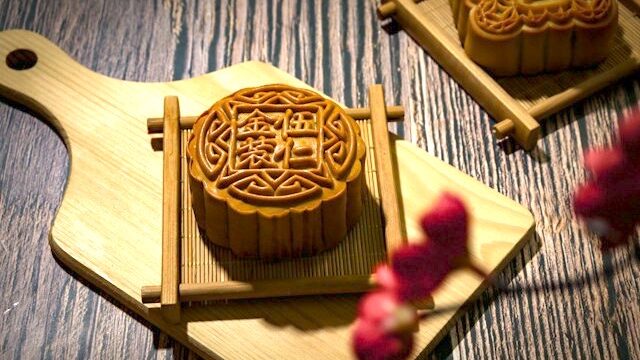
The central cultural motif of Mid-Autumn is tuányuán [團圓 reunion], represented by the perfectly round shape of the full moon and mooncakes. In Catholic social teaching, the family is revered as the “domestic Church”—the primary sanctuary where faith, love, and virtue are cultivated.
This imagery also evokes a distinct Marian dimension. Because the festival often falls near the Feast of the Nativity of the Blessed Virgin Mary [September 8], Catholic tradition frequently compares Mary to the full moon—fair, serene, and perfectly reflecting the glory of her Son, the ‘Sun of Justice.’ Celebrating under the moonlight can thus become a Marian meditation, perhaps through praying the Rosary to reflect on her humility and purity.
Mid-Autumn offers a sacred opportunity to gather with loved ones, honour elders, express filial piety, and heal familial estrangements. While the roundness of the mooncake acts as a physical token of wholeness, Catholics remember that the Eucharist is the true feast of unity, binding believers together in Christ’s Body and foreshadowing their ultimate destination: the eternal communion of Heaven.
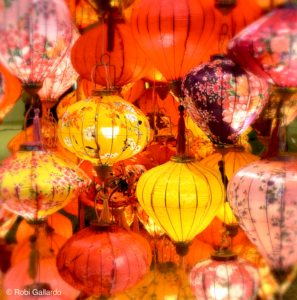
In practice, Catholic families observe Mid-Autumn by blending cherished social customs with intentional spiritual acts. Festive family dinners and the lighting of paper lanterns with children are paired with family prayer, giving thanks for living relatives and offering intercessions for deceased ancestors.
More importantly, the celebration also extends beyond the home. Recognising that the joy of the harvest must be shared, Catholic parishes and lay movements use the festival as a season for works of mercy. Mooncakes and care packages are actively distributed to low-income families, elderly individuals living alone, orphans, and hospital patients. In doing so, the cultural tradition of sharing food is transformed into an act of gospel charity, ensuring that the warmth of the festival reaches those on the margins of society.
We celebrate the Mid-Autumn Festival joyfully by receiving it as a time of thanksgiving, family reunion, and appreciation of God’s creation. Rather than treating the feast as a religious act in itself, we can see its best human meanings as gifts from God and turn them back to him in gratitude.
The festival’s emphasis on reunion fits naturally with our Catholic faith. Family gatherings, shared food, and the desire to be together can become a moment to thank God for loved ones, to pray for unity in the family, and to remember that the Church is also a larger family gathered in Christ.
The central cultural motif of Mid-Autumn is tuányuán [團圓 reunion], represented by the perfectly round shape of the full moon and mooncakes. In Catholic social teaching, the family is revered as the “domestic Church”—the primary sanctuary where faith, love, and virtue are cultivated
The moon and autumn night can also be appreciated as signs of creation’s beauty, pointing beyond themselves to the Creator and, for Christians, to Christ as the true light.
At the same time, we should steer clear of practices that conflict with our faith, such as moon worship, ancestor rites, or superstitious customs that give religious honour to anything other than God. The key is not to dismiss the culture, but to discern what can be received and what must be set aside. In that way, believers can participate in the festival with a clear conscience and a Christian heart.
A simple Catholic way to celebrate would be to share a meal, pray before eating, enjoy mooncakes and lanterns as cultural symbols, and perhaps read a short Scripture passage or offer a blessing for the family. In this way, Mid-Autumn Festival becomes not just a cultural reunion, but also a moment of thanksgiving, peace, and witness to Christ.