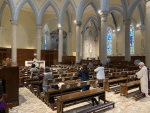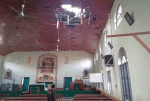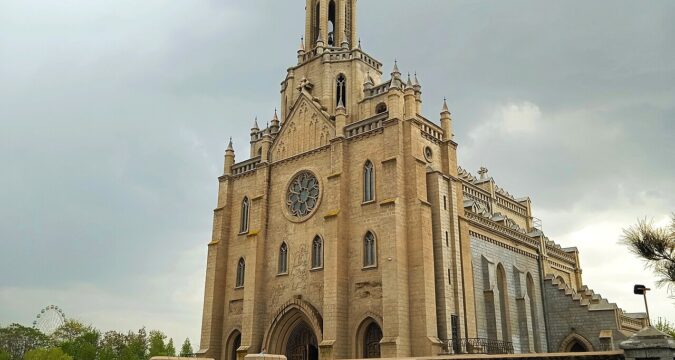
TASHKENT (Fides): In Uzbekistan, a Muslim-majority nation, the Catholic community is small but quietly growing. The Church is establishing new parishes, building relationships, and providing a spiritual home for those seeking faith and belonging. “Sometimes we start a new parish with three, four or five people. That is how it begins, with a small seedling,” explains Bishop Jerzy Maculewicz, apostolic administrator of Uzbekistan. “We make a beginning, and the Lord guides our steps.”
In the past two years, two new parishes have been established—one dedicated to Divine Mercy and another to St. Joseph. In Angren, about 90 kilometres from Tashkent, the parish has just over 20 faithful—mostly children—demonstrating the Church’s growth even in previously unreached areas.
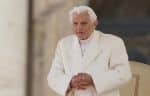
Bishop Maculewicz, who has served in Uzbekistan for over two decades, notes that growth, though gradual, is visible. Appointed in 2005, just before the death of Pope St. John Paul II, he continues to draw inspiration from the late pontiff’s legacy.
When the community chose a patron saint, St. John Paul II was proposed as there were no local martyrs to serve in that role.
We see that every person who draws closer to the Church has received a personal call from God
Bishop Jerzy Maculewicz
When Bishop Maculewicz arrived, there were five parishes, overseen by the Conventual Franciscan friars, who were tasked with developing the Church’s structures.
Under the former president, Islam Karimov, restrictions affected all faiths, with children and young people forbidden from attending places of worship. Since 2016, under current president, Shavkat Mirziyoyev, the country has become more open, and the Church now operates with greater peace and freedom—a change evident in the founding of new parishes.
Recent legal reforms have reduced state control and emphasised the separation of state and religion, strengthening protections for minorities, including Christians.
The Catholic Church in Uzbekistan numbers about 4,000 faithful out of a population of 39 million, served by around 10 priests and 15 religious sisters. Its sole jurisdiction is the Apostolic Administration, based in Tashkent.
Despite its small size and wide geographic spread, the Church attracts new members, including foreign students. Many Indian students—Catholic and non-Catholic—come to pray and find community. Parishes have become meeting places for friendship, spirituality, and belonging.
Despite its small size and wide geographic spread, the Church attracts new members, including foreign students
More families are Catholic from birth, rather than individual converts. Young Catholics now marry and raise children in the faith, deepening the community’s roots.
Bishop Maculewicz sees hope in this noting, “We see that every person who draws closer to the Church has received a personal call from God.” Each year, candidates prepare for Baptism over 18 months, while others, already baptised in other traditions, join through a profession of faith. At the 2026 Easter Vigil, around 10 people, including children, were baptised in Tashkent.
The community is also affected by migration, as young people seek opportunities abroad, creating both challenges and new opportunities for the Church.
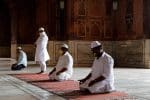
In this Muslim-majority society, Catholics value good relations and coexistence. There is a longstanding tradition of religious tolerance, rooted in Silk Road history, where people exchanged cultures and beliefs as well as goods. Uzbekistan’s diversity—home to over 120 nationalities—encourages interfaith encounters.
Bishop Maculewicz recalls a story of neighbours of different faiths celebrating holidays together—a testament to natural tolerance. Everyday hospitality fosters dialogue; Uzbeks are generous and welcoming, often inviting strangers for tea. “For many, what matters most is knowing that the person they are speaking to believes in God,” he says, “rather than knowing which religious denomination that person belongs to.”
In this Muslim-majority society, Catholics value good relations and coexistence. There is a longstanding tradition of religious tolerance, rooted in Silk Road history, where people exchanged cultures and beliefs as well as goods
Blessings are valued regardless of faith. This openness creates opportunities for trust and Christian witness. Interfaith dialogue also extends to relations with authorities. Bishop Maculewicz sits on the State Committee for Religious Affairs with other faith leaders. “It is a place where we can exchange ideas and offer our views to the government,” he explains. The government has considered their suggestions in recent legislation, which he describes as “a positive sign.”
The mission of all the baptised
“I would like to repeat the words of St. Francis Xavier: we must always maintain a missionary spirit, in every moment and in every action of our lives. Jesus sent us forth to proclaim the Gospel to all peoples. He sent all the baptised, not only priests and consecrated men and women, but laypeople as well,” the bishop said.
In Uzbekistan, this takes the form of personal encounters, hospitality, and quiet witness. “As Catholics, we are present, we build relationships, we accompany those who draw closer to the faith and offer a place of prayer to those seeking a community,” says Bishop Maculewicz.
“We are the salt of the earth and the leaven of the world. Even a small Catholic community can enrich a nation,” the bishop said.
“I believe the Lord has a plan for us. It is up to us to listen to his voice, do his will and fulfil his plan for this land and its people,” he said.