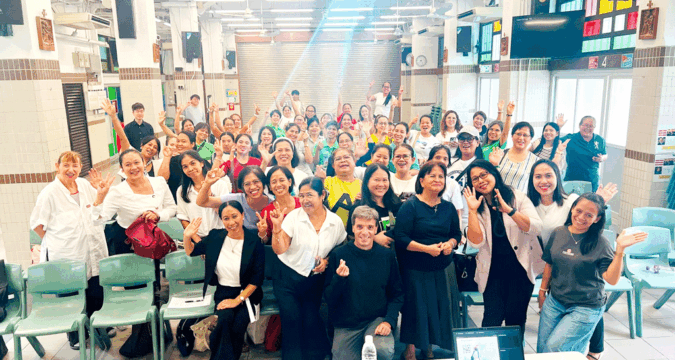
HONG KONG (SE): Facing acute financial pressures compounded by distance from home and unexpected family emergencies, foreign domestic workers in Hong Kong remain uniquely vulnerable to exploitation. In response, the Diocesan Commission for Integral Human Development hosted two financial literacy and anti-scam workshops on July 5 and July 19, with plans to expand the initiative to more parishes.
Alongside these educational efforts, the commission is urging employers to foster open dialogue during periods of financial strain, advocating understanding rather than immediate dismissal.
Jackie Hung Ling-yu, a project officer at the commission, explained that many workers fall victim to scams, debt, or illegal money laundering schemes. She emphasised that this is rarely due to greed or dishonesty. Rather, workers are vulnerable because they live far from their families, often face sudden financial pressures or medical bills back home, and are targeted by manipulative scammers.
Cultural vulnerabilities and dialogue
She said cultural differences also play a major role. Coming from close-knit, supportive communities, many workers see lending their bank accounts or identity documents as a simple act of kindness, unaware of the severe legal risks involved.
If employers discover their workers are in financial trouble due to a scam, Hung urges them to talk things through and to treat the worker as part of the household, rather than sacking them immediately.
…the commission is urging employers to foster open dialogue during periods of financial strain, advocating understanding rather than immediate dismissal
“Employers often fire workers or accuse them of dishonesty in these situations,” Hung noted. “However, I believe open dialogue and better communication can lead to far better outcomes.” Parishes interested in co-hosting these talks are encouraged to contact the commission.
On July 19, a session was held at St. Patrick’s Church in Wang Tau Hom, co-organised with the Mission for Migrant Workers and the Church. Speakers Daisy Mandap, editor of The Sun HK, and Father Franco Bellati of the Pontifical Institute for Foreign Missions, offered advice on avoiding scams, unscrupulous agencies, and legal traps while maintaining personal values.
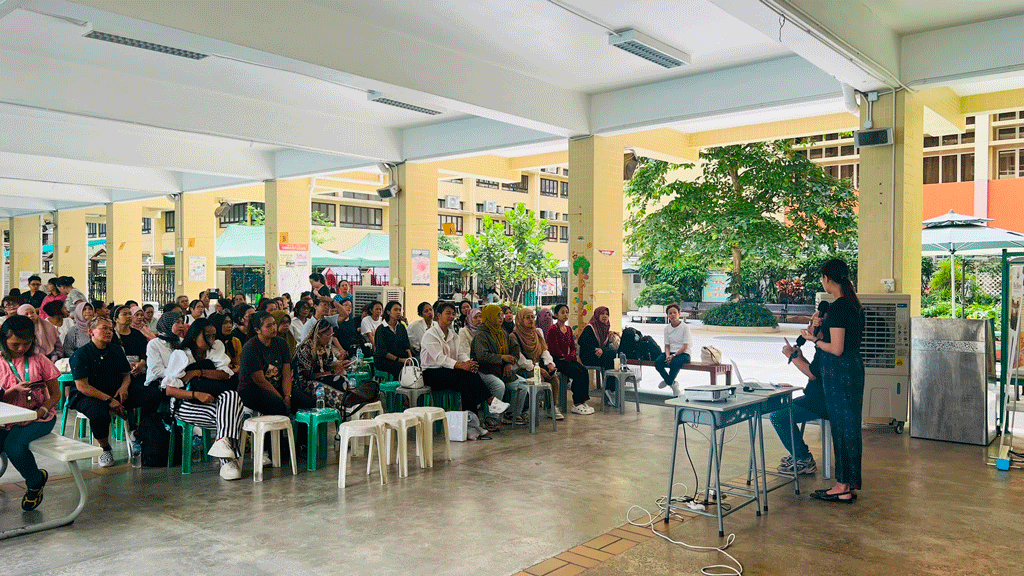
Mandap, who is also a lawyer, warned workers never to pay upfront recruitment fees, lend their visas or ATM cards, or join high-interest money schemes. Instead, she recommended secure savings options, such as the Pag-IBIG MP2 fund, and urged workers to contact support groups like the Mission for Migrant Workers if they encounter difficulties.
Father Bellati reminded attendees to be “wise as serpents and innocent as doves” [Matthew 10:16]. He explained that while practical intelligence is essential to avoid scams, it must always be guided by faith and a good heart.
He warned against greed, emphasising that an excessive focus on wealth can damage one’s relationship with God. “Money should be used as a practical tool to help others, rather than becoming an idol,” he noted.
Mandap, who is also a lawyer, warned workers never to pay upfront recruitment fees, lend their visas or ATM cards, or join high-interest money schemes
Addressing hardship, Father Bellati encouraged those who have been cheated or hurt to seek strength through prayer and forgiveness, rather than letting bitterness take over. He viewed suffering as an opportunity for spiritual growth and resilience.
Finally, he stressed that isolation makes individuals much more vulnerable to harm. Being part of a supportive community, where workers can share experiences and seek advice, is essential for both their spiritual well-being and practical protection.
The event also touched on the deep emotional toll of working overseas. Several attendees shared stories of failed marriages, highlighting the sad reality that many travel abroad to support their families, only to see those relationships deteriorate over time.
Additionally, the speakers drew attention to systemic issues, criticising companies in the Philippines for ignoring workers’ rights and noting gaps in Hong Kong law, such as weak protections against human trafficking.
Earlier, on July 5, the commission held a talk for Indonesian workers at Christ the King Chapel in Causeway Bay. Michelle Wong, a barrister, presented an anti-scam guide tailored to domestic workers.
She warned workers to watch out for common warning signs, such as promises of unrealistic investment returns, fake IDs, romance scams, blackmail, phishing links, and payment tricks. For example, in an overpayment scam, a fraudster deposits a fake cheque and requests an urgent partial refund for the pending balance before the cheque bounces.
Wong warned that scams can result in both financial ruin and serious legal consequences. Even unintentional involvement, such as lending a bank account, can lead to up to 14 years in prison for money laundering, deportation, dismissal, and a ban on future employment.
To stay safe, she advised workers never to share bank details or PINs, to verify all transactions, to report fraud to the police immediately with evidence saved, and to call the anti-scam helpline on 18222.