By John Singarayar SVD
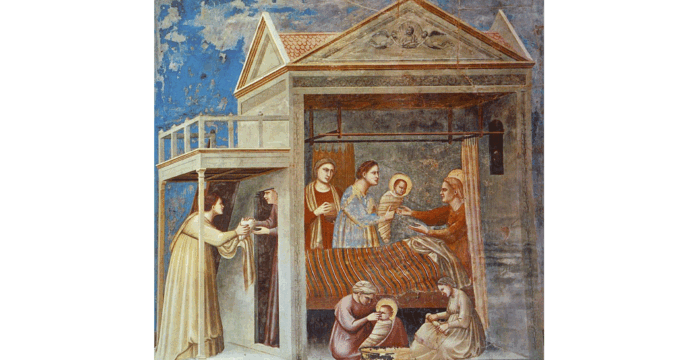
Every September 8, the Church marks a feast that rarely makes headlines: the Nativity of the Blessed Virgin Mary. In many parishes across Asia, it passes quietly. Yet this celebration of a girl child’s birth carries a message that could not be more urgent for our region: every girl is a person of dignity, possibility and purpose, not merely someone’s daughter, wife or mother.
The gospels say almost nothing about Mary’s childhood. Much of what Christian tradition associates with her early life comes from later writings and devotion rather than the canonical scriptures. Still, the Church’s decision to honour her birth is deeply theological: God’s work in history unfolds through ordinary human lives, and Mary’s story begins not with public achievement but with birth, family and a hidden childhood.
In a region where girls are still often seen as burdens, liabilities or temporary members of the family, that is worth remembering. In India alone, nearly one in four young women was married before 18, with risk sharply higher for girls with little or no schooling.
The dignity of the girl child
Mary’s story speaks directly to the condition of girls in Asia today. Across our societies, many girls still face discrimination before they have the freedom to shape their own lives. Poverty, child marriage, violence, unequal access to education, trafficking and social expectations continue to limit their choices. Even where legal rights have improved, attitudes can remain stubbornly unequal.
The Christian celebration of Mary’s birth should therefore challenge any culture that treats the birth of a girl as less welcome than the birth of a boy. In too many places, a daughter’s arrival is met with silence, disappointment or even despair. The feast of Mary’s nativity insists that every girl’s birth is worthy of joy.
Mary’s story speaks directly to the condition of girls in Asia today. Across our societies, many girls still face discrimination before they have the freedom to shape their own lives
Mary was not valuable because she eventually became the mother of Jesus. Her dignity did not begin with her motherhood. She was already a human person loved by God. This distinction matters because women and girls are too often valued according to the roles they perform for others. A girl should not have to become a mother, excel academically, earn money or meet some social ideal before her life is considered significant.
The feast can become an occasion for renewing our commitment to protect the dignity of every girl child.
Grace does not erase freedom
Mary’s importance in Christian theology is inseparable from grace, but grace did not turn her into a passive instrument. The Annunciation presents her as someone who responds freely to God’s call. Her “yes” has been remembered for centuries precisely because it is a human response to a divine invitation.
This offers an important insight for contemporary life in Asia. To honour Mary is not to romanticise female obedience or suggest that women exist simply to accept what others decide for them. Mary’s obedience is meaningful because it is an act of faith and freedom. Christian discipleship cannot be reduced to silence, submission or compliance with unjust expectations.
Mary was not valuable because she eventually became the mother of Jesus. Her dignity did not begin with her motherhood. She was already a human person loved by God. This distinction matters because women and girls are too often valued according to the roles they perform for others
For this reason, devotion to Mary should encourage the Church in Asia to listen more seriously to women and girls, especially when they speak about violence, exclusion, discrimination or abuse. Too often, their voices are marginalised in families, communities and even Church structures. Recent debates over gender discrimination and abuse within religious life in India have made this need even clearer.
From devotion to responsibility
There is always a danger that religious celebrations remain confined to beautiful liturgies, statues, prayers and sentimental language. The Nativity of Mary should lead somewhere beyond devotion.
If Mary’s birth is celebrated with joy, then the birth of every girl should be received with joy. If Mary is honoured as a person of extraordinary dignity, then girls in our homes, schools, parishes and communities must be treated with equal seriousness and respect.
This requires practical commitments: educating girls, protecting them from abuse, creating safe environments, challenging discriminatory customs and ensuring that they have opportunities to develop their gifts. It also requires fathers, mothers, teachers, priests and community leaders to examine the assumptions they pass on to the next generation. The Catholic Bishops’ Conference of India’s gender policy has long called for free, compulsory education for girls in Catholic schools and for closing gender gaps in secondary and higher education; living out that policy is part of honouring Mary.
A Church that praises Mary while tolerating the humiliation or silencing of women has not fully understood what it is celebrating.
If Mary’s birth is celebrated with joy, then the birth of every girl should be received with joy
Mary’s hidden years matter too
Perhaps one of the most beautiful aspects of Mary’s story is that most of her life was hidden. The world did not know her childhood achievements. She had no public platform and no visible status. Yet her life mattered.
This is a powerful corrective to our age of constant exposure. Children and young people today are often encouraged to build identities around appearance, achievement and public recognition. Mary reminds us that human worth does not depend on being noticed.
The girl child growing up quietly in a home, learning, playing, struggling, dreaming and discovering herself already possesses an irreducible dignity. Her life does not need to become extraordinary in the eyes of the world to be precious.
The Nativity of Mary, therefore, is not simply a feast about the mother of Jesus. It can become a celebration of beginnings: of childhood, of possibility, of hidden growth and of God’s presence in lives whose significance may not yet be visible.
Children and young people today are often encouraged to build identities around appearance, achievement and public recognition. Mary reminds us that human worth does not depend on being noticed
A feast that asks something of us
Mary’s birth should move us from admiration to responsibility. It asks whether our families welcome daughters with the same joy as sons, whether our institutions protect girls, whether our communities challenge practices that diminish them, and whether the Church in Asia creates spaces where women and girls can speak, lead and flourish.
To celebrate Mary is to celebrate a girl whose life became part of salvation history. That should make us look again at every girl whose future is still unfolding.
The deepest tribute to Mary may not be found only in the words we say about her. It may be found in the way we treat the girls entrusted to our care.