NEW DEHLI (LiCAS News): The Catholic Church in India warned that debate over a possible “right to die” could intensify following a landmark ruling by the country’s Supreme Court allowing the withdrawal of life support.
This decision marks the first time an Indian court has approved the withdrawal of treatment since the country recognised the practice under regulated conditions in 2018.
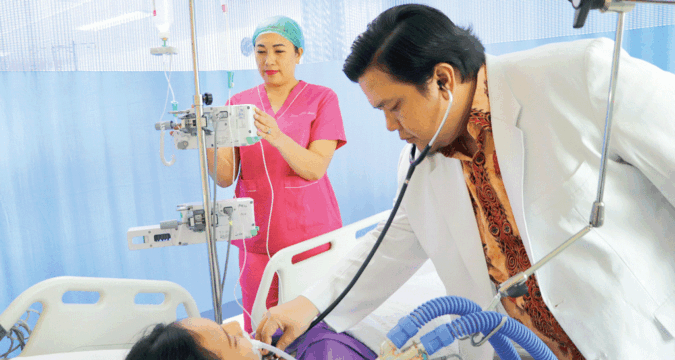
The case concerns Harish Rana, who has remained in a vegetative state since suffering severe head injuries after falling from the fourth floor of a building in 2013. After more than a decade without improvement, his parents asked the court to allow doctors to withdraw medical support.
According to AsiaNews, Archbishop Victor Thakur of Raipur, president of the Board of Directors of the Society for Medical Education of the Catholic Bishops’ Conference of India [CBCI], said the court handled the case carefully but warned the ruling may influence future debates on end-of-life decisions.
“The judges did not use the term ‘passive euthanasia’ in this case,” Archbishop Thakur said. “In fact, the Supreme Court handled the Rana case very diligently and appropriately, allowing extraordinary medical support to be terminated.”
At the same time, he said the ruling could shape broader discussions about assisted dying. “The door has been opened to the use of the term ‘right to die’, and it will be difficult to decide in the future,” he said.
Pope St. John Paul II’s encyclical, Evangelium Vitae [The Gospel of Life] defines passive euthanasia as “withholding or withdrawing treatment with the intention of causing death, is intrinsically evil and not equivalent to legitimate refusal of care.”
Church teaching promotes palliative presence as true compassion rooted in Christ’s love, fostering hope in God, upholding human dignity and helping families accept death.
In their decision, Justices JB Pardiwala and KV Viswanathan said Rana showed “no meaningful interaction” and depended on others for “all self-care activities”, including feeding administered through cannulas.
“His condition has shown no improvement,” the judges said.
They also praised the family’s dedication during the years of treatment, noting that “his family has never left his side”, and that “loving someone means caring for them even in the darkest moments.”
While approving the request to withdraw treatment in Rana’s case, the court urged the government to consider introducing comprehensive legislation on passive euthanasia.
The debate on euthanasia in India has unfolded over several years, intensifying after the case of Aruna Shanbaug, a nurse who remained in a vegetative state for 42 years following a brutal sexual assault. She died of pneumonia in 2015, but her case sparked a broader national discussion.
Subsequent court rulings recognised the possibility of passive euthanasia under strict safeguards and judicial oversight.
Active euthanasia, in which substances are directly administered to cause death, remains illegal in India.
The issue continues to provoke debate worldwide. Supporters argue that terminally ill patients should have the autonomy to choose a compassionate end when suffering becomes unbearable, while opponents emphasise the sanctity of life.