MANILA (UCAN): The Diocese of Novaliches in Metro Manila, the Philippines, has launched an anti-corruption initiative prioritising dialogue among laypeople rather than clergy-led seminars, aiming to empower citizens to push for government reform.
Named the Novaliches Citizens Empowerment for National Transformation—or Novacent—will focus on four themes: fighting corruption, ending political dynasties, reforming the electoral system, and the impeachment case against Duterte, explained the vicar general, Father Antonio Labiao Jr. on March 27.
Father Labiao said the initiative will adopt a “synodal” method—a process involving “conversations in the Spirit,” promoted by the late Pope Francis and continued by Pope Leo XIV.
He said about 54 facilitators have been trained to guide discussions at the grassroots level.
“We need to listen to one another. We need to listen to what God is saying to us about our particular situation,” Father Labiao said
We need to listen to one another. We need to listen to what God is saying to us about our particular situation
Father Labiao
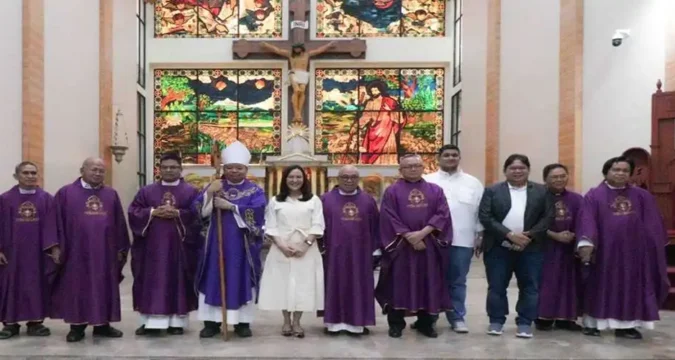
At the programme’s launch on March 22, Bishop Roberto Gaa of Novaliches said the Church’s occasional involvement in sociopolitical issues is no longer sufficient. “We cannot just be fence-sitters anymore,” he said.
During the May 2022 presidential election, hundreds of clergy publicly supported then-vice president, Leni Robredo, the main rival of current president, Ferdinand Marcos Jr., son of the late the late dictator.
Despite that support, more than 30 million Filipinos elected Marcos Jr. as president.
Father Labiao said, citing earlier analysis, that the outcome exposed an “invisible divide” between clergy and laity in politics. He said the new initiative also seeks to bridge that gap.
As we celebrate the 500 years of Christianity in the Philippines. The Chaplaincy to Filipino Migrants organises an on-line talk every Tuesday at 9.00pm. You can join us at:
https://www.Facebook.com/CFM-Gifted-to-give-101039001847033
“Those who take initiative in the Church should not only be priests. Let us organise our laypeople so they can take the lead, and we support them,” he said, echoing broader calls to move away from clericalism.
Those who take initiative in the Church should not only be priests. Let us organise our laypeople so they can take the lead, and we support them
Father Labiao
One of the sticky issues confronting the diocese, however, is the impeachment case against Sara Duterte. She enjoys the trust of 54 per cent of Filipinos, compared to Marcos’ 35 per cent, in a recent Pulse Asia survey.
Father Labiao said it is important to explain to people that the focus is not the person—Sara Duterte—but the issue of accountability.
“We have to learn to listen,” said Labiao. “It’s not easy to do, but it’s good to try.”
One of the country’s most prominent dioceses, Novaliches serves more than 3.2 million people, mostly in Quezon City, and includes the House of Representatives within its territory.
The Philippines has a long history of clergy taking leading roles in sociopolitical issues. Among the most prominent was the late Jaime Cardinal Sin of Manila, who helped oust dictator Ferdinand E. Marcos in 1986.