John Singarayar, SVD
There is an old African proverb that says, ‘If you want to go fast, go alone.’ But if you want to go far, go together. For the past 15 years, a small religious community in the Indian state of Maharashtra has been living that proverb out, not as a slogan on a wall, but as a daily commitment, village by village, family by family, one quiet conversation at a time.
They have not been moving fast. That is the point.
The Society of the Divine Word, known by its Latin acronym SVD, has been walking alongside one of India’s most forgotten communities—the Katkari people—since 2010. What they have built together in the years since is not easily measured in statistics, though the statistics are real. It is better measured in something harder to quantify: restored dignity, recovered voice, and the stubborn, slow-burning kind of hope that does not flicker out when the cameras leave.
A people made invisible
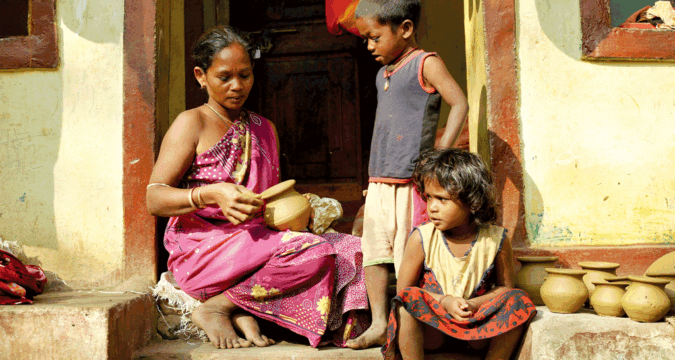
The Katkari are a tribal community in Maharashtra’s Raigad district, about 160 kilometres south of Mumbai. They make up more than a third of the district’s tribal population. Yet most people in India—let alone elsewhere in the world—have never heard of them.
Poverty, as Pope Leo XIV wrote in his recent apostolic exhortation Dilexi Te, is never only about empty stomachs or broken homes. It is about erasure—cultural, social, spiritual. It is about losing your voice until, eventually, even you forget you once had one
This is not an accident. Generations of structural neglect have rendered the Katkari effectively invisible. They are largely landless. Unemployment is widespread. Child marriage remains common.
Many families survive through seasonal migration, following work that barely covers their needs and constantly uproots them from everything familiar.
As Indian cities expand and industrialise, Katkari communities find themselves stranded—small islands of poverty surrounded by a world moving quickly in a direction that does not include them.
Poverty, as Pope Leo XIV wrote in his recent apostolic exhortation Dilexi Te, is never only about empty stomachs or broken homes. It is about erasure—cultural, social, spiritual. It is about losing your voice until, eventually, even you forget you once had one.
The Katkari know this erasure intimately. They have been pushed to the margins so systematically, for so long, that they have nearly disappeared.
A different kind of arrival
Most development interventions arrive in communities like this with clipboards, project timelines, and exit strategies. They come with good intentions. They sometimes do good. But they almost always leave—and when they do, the underlying conditions remain largely unchanged.
Today, women’s self-help groups are running in eight Katkari villages, and what is happening inside them is quietly extraordinary.
The SVD’s approach, through its local arm, Janseva Society, was different from the start. When the SVD director arrived in Tala in 2013, he did not come as a visiting expert or a project manager on a short-term assignment. He moved there. Permanently. He chose to share the Katkari’s daily reality—the rutted roads that become rivers during monsoon season, the community celebrations that make poverty bearable, and the everyday indignities that make it unbearable.
That choice sent a message no programme document ever could. It said, simply: you are not problems to be solved. You are people worth knowing. Your lives matter enough to share.
The SVD listened first—not with surveys, but through patient, open-ended conversations over many months. What do you need? What do you dream about for your children? What has been tried before, and why did it not work? The Katkari named their own priorities. The SVD became partners in pursuing them.
Small rebellions in eight villages
Today, women’s self-help groups are running in eight Katkari villages, and what is happening inside them is quietly extraordinary.
Katkari women—many of whom had little formal education, no independent access to money, and no experience of organising collectively—are learning their legal rights, managing shared savings, and supporting one another through difficult decisions.
When Covid-19 pushed schools online in 2020, Katkari children disappeared from education almost overnight. No Internet access. No devices. No one in government is scrambling to solve the problem for communities this marginalised. The SVD organised supplementary classes across the villages and kept learning going
Among the most significant: resisting child marriage. Mothers who once accepted that a daughter would be married off at 13 or 14 are now insisting those daughters stay in school. That shift does not happen because someone told them it should. It happened because the women found each other, built trust, and discovered they were not alone in wanting something different.
When Covid-19 pushed schools online in 2020, Katkari children disappeared from education almost overnight. No Internet access. No devices. No one in government is scrambling to solve the problem for communities this marginalised. The SVD organised supplementary classes across the villages and kept learning going.
It was not a large intervention by any measure. But for the children it reached, it was the difference between staying connected to school or losing those years entirely.
Meanwhile, SVD staff have worked steadily to help families obtain the identity documents that most people take for granted: caste certificates, ration cards, and land papers. This work sounds administrative. In practice, it is transformative. For communities rendered legally invisible, documentation is a form of recognition. It is the state acknowledging, on paper, that you exist—and that you have rights.
Building something that stays
One of the most tangible changes has come through a goat-rearing project run by the women’s self-help groups. Small herds, carefully managed. Offspring are sold when the time is right. Savings accumulated over months and years.
Pope Leo’s exhortation Dilexi Te calls on Catholics—and implicitly, on all people of goodwill—to embody love not as a sentiment but as a practice: to stand in solidarity with those whom society has pushed aside, not from a comfortable distance, but up close, through sustained presence and genuine relationship.
The income is modest—nothing like what a city job might pay. But it offers something seasonal migration cannot: stability. The ability to stay home. To raise your children in one place. To build something that compounds over time, rather than spending every year starting over somewhere new.
Two villages now have community halls, built through collective effort. They are more than buildings. For communities long told — explicitly and implicitly—that they do not quite belong, that they are temporary, that they should move along, these halls make a concrete, physical counter-argument. They say, “This is your place.” You are not passing through. You are home.
On Adivasi Day and International Women’s Day, Katkari children perform traditional dances and songs. Their artwork fills the walls of schools and community spaces. Their voices fill rooms that usually silence them. These celebrations are not token gestures toward inclusion. They are something more serious: an insistence that Katkari culture has value, that it deserves to be carried forward, and that it is something to be proud of rather than ashamed of.
A model worth knowing
Pope Leo’s exhortation Dilexi Te calls on Catholics—and implicitly, on all people of goodwill—to embody love not as a sentiment but as a practice: to stand in solidarity with those whom society has pushed aside, not from a comfortable distance, but up close, through sustained presence and genuine relationship.
The African proverb does not promise speed. It promises distance. In Tala, that slow, steady journey together has covered territory that no quick intervention ever could
The SVD’s work in Tala is a practical demonstration of what that looks like. They have not admired the Katkari’s situation from afar. They have moved in, stayed, listened, organised, celebrated, and advocated—year after year, without fanfare, in the kind of slow and faithful way that rarely makes headlines but changes lives.
What Tala’s villages look like today is different from what they looked like in 2010. Farmers work land they own. Children are completing school that their mothers fought to keep them in. Women lead community initiatives. Young people are building futures without having to leave. These changes did not happen because an organisation delivered services to passive recipients. They happened because people found one another, built power together, and decided their lives were worth changing.
The SVD walked alongside that process. That is not nothing. In fact, it may be the most important thing.
What goes far
There is something about the pace of this work that deserves acknowledgement. In an era of rapid-response interventions, viral campaigns, and impact metrics measured in months, the SVD’s 15-year commitment to one small region, one marginalised community, is almost counter-cultural.
What Tala’s villages look like today is different from what they looked like in 2010. Farmers work land they own. Children are completing school that their mothers fought to keep them in. Women lead community initiatives. Young people are building futures without having to leave
It will not make a flashy documentary. There is no single dramatic turning point to build a story around. There are only years of showing up—at community meetings, in women’s groups, in government offices filing paperwork, at celebrations where children dance and elders watch—and the slow accumulation of trust that makes everything else possible.
The African proverb does not promise speed. It promises distance. In Tala, that slow, steady journey together has covered territory that no quick intervention ever could.
One village. One family. One conversation at a time. That is not fast. But it goes very, very far.