by John Singarayar, SVD
World Day of Peace arrived in 2026 amid a world torn by conflict. Wars grind on in Ukraine and Gaza, while Myanmar’s civil strife and Africa’s crises scatter families and destroy homes. Military budgets swell as nations arm against perceived threats, creating cycles where fear breeds more fear. Yet this annual observance, begun by Pope Paul VI in 1968, persists as a beacon—inviting all people, regardless of faith, to pray and act for harmony.
The papal vision reminds us that peace is not merely the absence of war but something built through dialogue, justice, and shared commitment, especially in regions like Southeast Asia where diverse beliefs coexist amid rapid change.
Pope Paul imagined this day as a global promise, renewed each New Year, declaring peace as humanity’s highest good. His successors deepened this vision, connecting peace to solidarity across boundaries. Pope John Paul II, addressing bishops from Malaysia, Singapore, and Brunei, emphasised the “dialogue of life”—where believers from different backgrounds unite to serve the vulnerable, welcome immigrants, and resist materialism’s pull.
Speaking to ambassadors from Indonesia and Thailand, he praised national philosophies like Indonesia’s Pancasila, with its principles of belief in God, unity, justice, and tolerance, as foundations for interreligious harmony. These values allow small Catholic communities throughout ASEAN to contribute boldly through education, healthcare, and social outreach, building trust in multi-faith societies.
Papal teachings consistently warn that ignoring justice fuels conflict—disparities between rich and poor breed violenc
Pope Francis echoed these themes during his 2024 Indonesia visit, calling politics “the highest form of charity” and highlighting how Pancasila promotes equity, rights, and peace. He urged eliminating prejudices through dialogue to counter extremism, emphasising the Church’s role in weaving balanced social fabric without imposing beliefs. Now Pope Leo XIV builds on this legacy.
In his 2025 message to the Astana Congress of religious leaders, he described genuine cooperation as “working together—with one another and with the Divine”—rooted in our shared humanity and respect for truth in all religions. At the Sant’Egidio peace meeting, he reaffirmed prayer’s transformative power, invoking the spirit of Assisi where religions serve as “mothers” nurturing fraternity rather than enmity.
These teachings speak directly to our fractured present. Southeast Asia faces economic growth alongside refugee crises, ethnic tensions, and climate disasters. Myanmar’s violence displaces countless families, while environmental challenges strain vulnerable communities. Catholic minorities, often immigrants themselves, lead by example—offering pastoral care and joining hands across faiths for those in need.
This embodies Pope Leo XIV’s vision: when disasters strike or poverty bites, faith communities unite for relief, proving that cooperation bears real fruit.
Pope Paul imagined this day as a global promise, renewed each New Year, declaring peace as humanity’s highest good. His successors deepened this vision, connecting peace to solidarity across boundaries
The challenge for 2026 lies in expanding this model globally. World Peace Day could spotlight Southeast Asia’s example, where local dialogues transform differences into strengths, as John Paul II urged against the isolation of individualism.
Papal teachings consistently warn that ignoring justice fuels conflict—disparities between rich and poor breed violence. Yet hope persists in prayer and practical action, in creating what Pope Leo calls “tents of encounter” where people of goodwill gather.
In ASEAN Churches, this means deepening the “dialogue of life”: parishes hosting interfaith relief efforts for flood victims, youth forums exploring shared values like Pancasila’s principles, or centers welcoming refugees with dignity. Globally, it challenges nations to redirect resources from weapons to development, to choose trust-building over deterrence. It asks individuals to forgive debts that oppress others, disarming hearts before demanding nations disarm militaries.
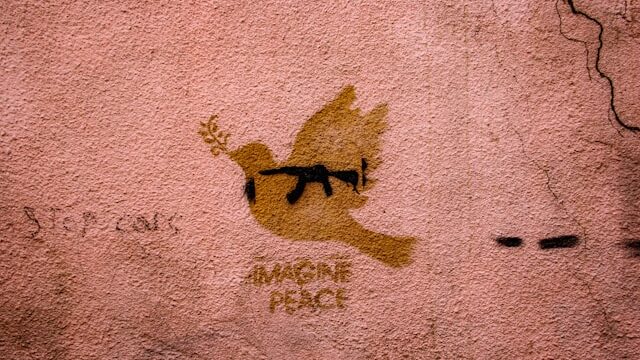
Pope Leo call for “unarmed and disarming” peace fits these realities perfectly. It rejects the notion that strength lies only in force, instead cultivating goodness that softens conflicts. In Myanmar’s ruins or amid maritime tensions in the South China Sea, this looks like choosing reconciliation over revenge, listening over shouting. The Church serves everyone regardless of background, demonstrating that even in polarised times, faith can foster understanding and heal divisions.
World Peace Day could spotlight Southeast Asia’s example, where local dialogues transform differences into strengths, as John Paul II urged against the isolation of individualism
This vision demands courage because it runs counter to instinct. When threatened, we naturally guard ourselves, build walls, strike first. An unarmed peace requires trusting that extending a hand proves stronger than raising a fist, that vulnerability can transform enemies into neighbours. It means seeing beyond national interests to recognise our interconnected fate—that pollution, poverty, and violence anywhere eventually touch everywhere.
As 2026 dawns, papal wisdom offers a path forward. Prayer opens hearts; action reconciles. In Southeast Asia and beyond, faiths can cooperate without erasing differences but by enriching our shared world. True peace flourishes when we choose solidarity over suspicion, remembering that there can be no peace among nations without peace among religions. This Day of Peace is not an abstract ideal but a practical call to heal wounds and build tomorrow.
Each of us can begin where we stand: mending a broken relationship, speaking up for the marginalised, welcoming the stranger, or simply praying for those we consider enemies. In a world quick to arm itself, this disarming approach takes real bravery. But if enough hearts open, if enough hands reach across divides, we might transform our fractured reality into something closer to the peace Christ offered his disciples—a peace not fragile but enduring, not imposed but freely shared.
Father John Singarayar is a member of the Society of the Divine Word, India Mumbai Province,
and holds a doctorate in Anthropology. He is the author of seven books and a regular contributor to academic conferences and scholarly publications in the fields of sociology, anthropology, tribal studies, spirituality, and mission studies. He currently serves at the Community and Human Resources Development Centre in Tala, Maharashtra.