MANILA (UCAN): Leading human rights activists in the Philippines have urged Catholic Church leaders to confront political corruption and human rights abuses as they prepare for dialogue with the country’s president, Ferdinand Marcos Jr.
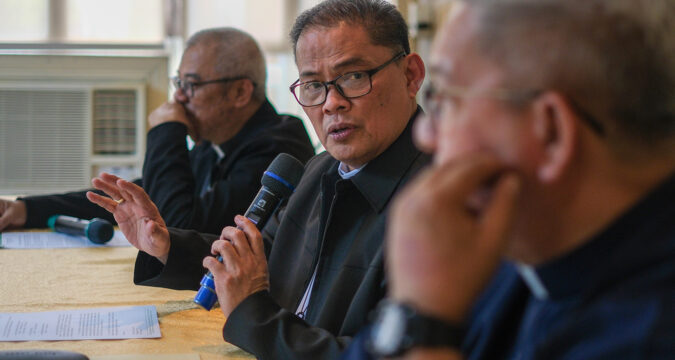
The calls followed remarks by Archbishop Gilbert Garcera of Lipa, the new president of the Catholic Bishops’ Conference of the Philippines [CBCP], who stated on January 26 that the bishops were “open to a dialogue” with Marcos.
The 66-year-old Archbishop Garcera assumed office on 1 December 2025, succeeding Pablo Virgilio Cardinal David, and presided over the CBCP’s 131st plenary assembly, held from January 24 to 26 in Manila. He spoke to the media for the first time as conference president.
The bishops are “open to [discuss] anything that would be good, especially for the Filipino people,” Archbishop Garcera said, without specifying possible agenda items.
“We are open because conversation is necessary. The key word is dialogue, in humility,” the archbishop said.
Former lawmaker and rights activist, Neri Colmenares, said the bishops should press Marcos to enact a law banning political dynasties, which, he argued, enable a small elite to amass wealth through corruption.
We are open because conversation is necessary. The key word is dialogue, in humility
Archbishop Garcera
Colmenares also called on Church leaders to push for legislation to uphold freedom of information, as well as reforms to make the national budget “transparent, accountable, and consultative.”
In a country where Catholics account for about 80 per cent of a population of roughly 120 million, the Church plays “a big role” in defending people’s economic, social and cultural rights, Colmenares observed on 27 January.
“When people are oppressed, the Church is oppressed,” he said.
As we celebrate the 500 years of Christianity in the Philippines. The Chaplaincy to Filipino Migrants organises an on-line talk every Tuesday at 9.00pm. You can join us at:
https://www.Facebook.com/CFM-Gifted-to-give-101039001847033
Renato Reyes, president of the activist group, Bayan, called on the bishops to focus on people’s concerns, including corruption, and help promote “lasting peace, genuine economic development and sovereignty.”
However, he warned that Church leaders should not allow dialogue with Marcos to be used “to escape accountability”, alleging that the administration is seeking to “whitewash its crimes and misdeeds”.
Before engaging the president, Reyes said the bishops should consult widely with various sectors to better understand the people’s demands.
Kiko Aquino Dee, co-convenor of the activist group, Tindig Pilipinas, said the bishops should prioritise fighting corruption and addressing the plight of the poor, particularly hunger and malnutrition.
When people are oppressed, the Church is oppressed
Neri Colmenares
Dee also urged Church leaders to assert the need for a Truth Commission to investigate killings linked to the war on drugs under former president, Rodrigo Duterte.
Cardinal David had written to Marcos in late 2025 calling for such a commission.
Dee, a grandson of democracy icons, former president Corazon Aquino and former senator Benigno Aquino Jr., also said the bishops should help the nation reckon with the legacy of the Marcos dictatorship from 1972 to 1986.
According to Amnesty International, the dictatorship of the late Ferdinand Marcos Sr. resulted in the killing of about 3,240 people and the imprisonment of some 70,000 others, while an estimated US$5–10 billion in public funds was stolen.
Church leaders played a key role in the 1986 “people power” uprising that toppled the dictatorship and brought Corazon Aquino, a devout Catholic, to power as the country’s first female president.
Dee, a senior political science lecturer at the University of the Philippines, said that in a democratic system, the Church is “one of many different groups”, but remains “a loud voice within a plurality of voices”.
He said, “The Church has the right and responsibility to use that voice to intervene in issues that are of importance to them.”